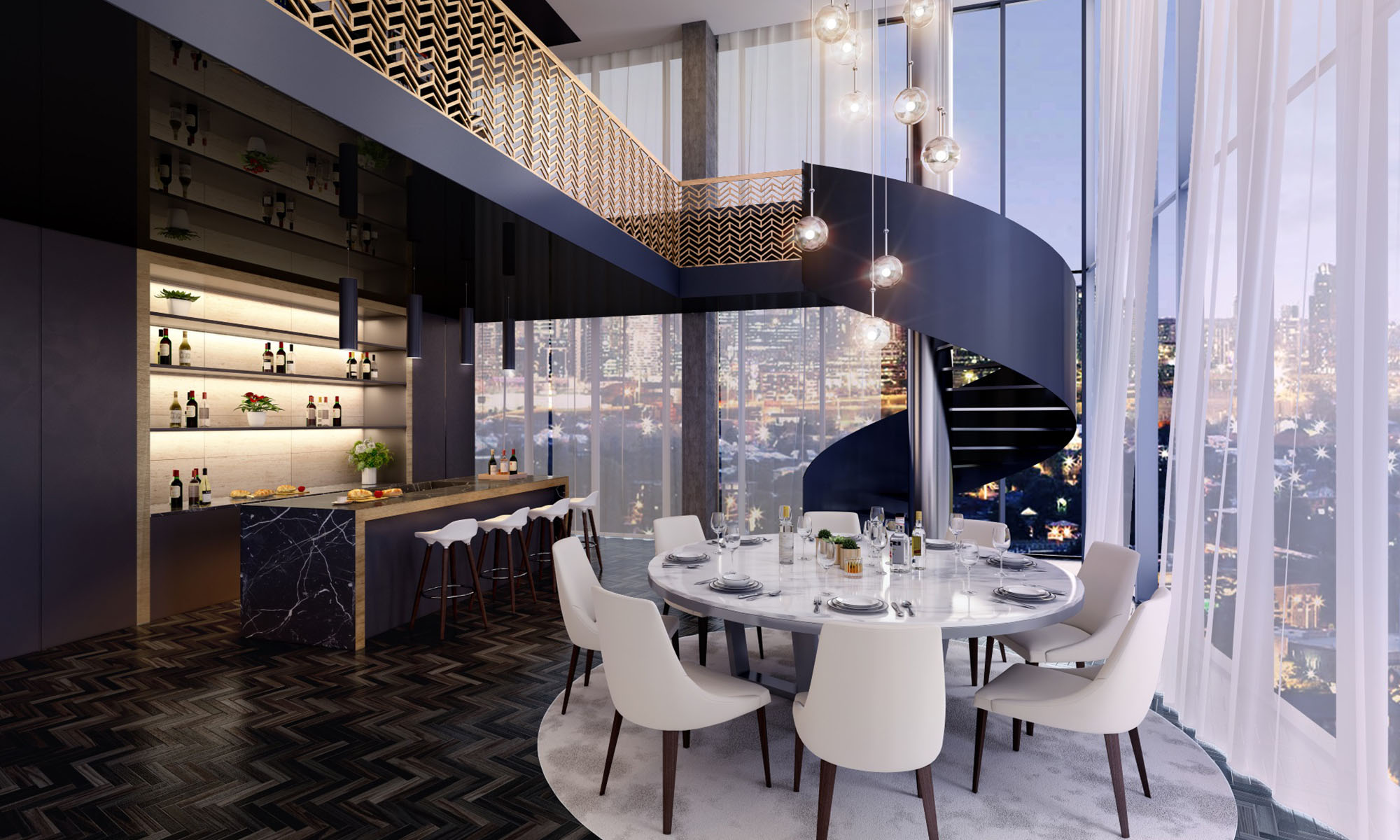
LU Simon commences construction on Growlands Victoria Square

PUBLICATION: Urban.com.au
DATE:

Developer Growland has appointed LU Simon to build stage one of its mixed-use residential project Victoria Square, with construction now underway on the first two towers, reinforcing the continued demand for Footscray.

The $600 million project comprises six residential towers of 937 apartments, in addition to over 5,500 sqm of commercial, retail and hospitality space on Hopkins Street. The first phase of Victoria Square is expected to be completed by late 2020 and has achieved sales of 90%. Stage three, titled VS03, has just launched to market and will include a boutique collection of just 86 apartments.

Growland says it’s not surprising Footscray has become a hotspot, particularly for young buyers, with research from District Data indicating that the area is in the early ‘hotspot’ phase, providing buyers an opportunity to take advantage of excellent value for money.

According to Growland, the company is proud to be partnering with LU Simon, a builder that it says shares its vision for the project and commitment to the well-being of the residents.LU Simon has had a presence in the Melbourne for over 60 years, across a broad portfolio of projects including eight residential projects across Australia currently at construction.

Victoria Square is just one of a growing number of residential sites commencing in Footscray, with the suburb now one of Melbourne’s most sought-after inner-suburbs for young homebuyers. District Data indicates the proportion of residents aged 20-39 has increased by a substantial seven per cent between 2006 and 2016. These buyers are driving demand for housing and a subsequent shift in the local built environment, with approximately 282 dwellings currently under construction in the area.

The appeal of Footscray as a suburb to buy apartments in is also reflected in it being amongst the 5 most viewed suburbs on Urban.com.au during October, in fourth place.

Growland’s first two Victoria Square Footscray towers nearly sold out

PUBLICATION: Property Observer
DATE:

Melbourne-based developer Growland has seen its first two-tower stage of Victoria Square, its mixed-use residential project in Footscray, nearly sell out, around two years before its completion.

90 percent of the apartments have been sold.

Growland recently awarded a $130 million contract to Australian builder LU Simon for the construction of the towers, which has officially commenced.

The $600 million Victoria Square project comprises six residential towers totalling 937 apartments and over 5,500 sqm of commercial, retail and hospitality space on Hopkins Street.

Stage three, titled VS03, has just launched to market and will include a boutique collection of just 86 apartments.

Footscray has quickly become one of Melbourne’s most sought-after inner-suburbs for young homebuyers, with District Data indicating the proportion of residents aged 20-39 has increased by seven percent between 2006 and 2016.

These buyers are driving demand for housing and a subsequent shift in the local built environment, with around 282 dwellings currently under construction in the area.

Growland Chairman Bruce Chan says it’s not surprising Footscray is such a hotspot for young buyers.

Footscray is an ideal location for young families, working professionals and first and second home buyers,” said Chan.

“In addition to being just 4km from Melbourne’s CBD, it is a thriving education and employment hub in its own right, which is driving the shift in demographics to younger buyers that want to be close to the action.

“The multicultural community offers an impressive variety of hospitality options and a friendly and vibrant atmosphere.

“It’s incredibly rewarding to be able to play a role in the area’s rejuvenation and to create a communal space where locals can enjoy top-quality restaurants and retail outlets

LU Simon wins $130m contract

PUBLICATION: Australian Property Journal
DATE:

DEVELOPER Growland has awarded a $130 million contract to builder LU Simon to deliver the first stage of its $600 million mixed-use residential project Victoria Square.

Construction has officially commenced on the first two towers. Growland chairman Bruce Chan the start of work highlights the evolution of Footscray, which is quickly becoming one of Melbourne’s most sought-after inner-suburbs for young homebuyers, with District Data indicating the proportion of residents aged 20-39 has increased by a substantial seven per cent between 2006 and 2016.

“Footscray is an ideal location for young families, working professionals and first and second home buyers.

“In addition to being just 4km from Melbourne’s CBD, it is a thriving education and employment hub in its own right, which is driving the shift in demographics to younger buyers that want to be close to the action,” he added.

This first two-tower stage, which is almost completely sold at 90%, is expected to be complete within two years. Stage three, titled VS03, has just launched to market and will include a boutique collection of just 86 apartments.

Victoria Square’s Next Phase Adds to Footscray’s Development Pipeline

PUBLICATION: Urban Melbourne
DATE:

Designs for the next phase of Growland Group’s six tower Victoria Square residential development in Footscray have been released. As reported on Urban.com.au back in May, Fender Katsalidis were tasked with the design of the twin tower project, located within the Joseph Road precinct bound by Hopkins Street, the Maribyrnong River and the railway line.

The Joseph Road Precinct represents 15 hectares of developable land which has been identified as a Priority Development Zone in the Council’s Structure Plan for Footscray.

In launching stage three which will be known as VS03, Growland claims it has responded to buyer demand and a maturing apartment market. VS03 will feature a product mix and floor plans geared towards owner occupiers, who account for 80 per cent of the sales to date. 76 per cent of the apartments within stage three comprise two-bedroom, two-bathrooms, while all 86 apartments will feature floor plans larger than Melbourne’s average and have at least one car space, one storage cage and a private balcony ranging from eight to 13 sqm.

Fender Katsalidis have designed twin curvilinear towers which draw on Victoria Square’s riverside location along the Maribyrnong River, with full height windows maximising panoramic views over the river, the CBD and the bay beyond. VS04 will be released at a later date, with the first two stages achieving 90% sales success.

Victoria Square turns to lower density approach with latest tower

PUBLICATION: realestate.com.au
DATE:

FOOTSCRAY’S streets have gentrified in recent years, but with house prices also soaring families and professional couples are increasingly turning to the apartment market. And one of the suburb’s biggest developments to date, Victoria Square, has changed its plans to accommodate them. RELATED: Victoria Square in inner west catching the eye of outer suburbs’ buyers Footscray penthouse apartments have first-home buyer price tags Growland chief executive Ronald Chan said while its first two stages were now 90 per cent sold, they were changing their approach to lower density and bigger — though still affordable apartments — for the third stage, named VS03. “Tower three is very different in terms of the number of apartments in the building,” Mr Chan said. The 13-storey tower is the shortest and will house 86 apartments, compared to 240 in the 24-storey first tower and 180 across the 21 levels of the second. While both of the preceding towers were taller, the latest one to hit the market will put more space into its residences, with 66 apartments — one in every four — featuring two-bedroom, two-bathroom floorplans. “In stage three we are targeting owner occupiers and first-home buyers, and we have found that two-bedroom and two-bathroom properties were very popular with young families and professional couples,” Mr Chan said. That translates to a 72sq m average internal size for the two-bedroom apartments, not including a balcony, carpark and storage space that comes with each residence. It has also translated to significant demand. Of the 13 apartments sold at a launch event earlier this month, 11 were two-bedroom designs.

First-home estate for Tarneit

PUBLICATION: Star Weekly
DATE:

A Melbourne-based developer is set to build a 900-home estate in Tarneit aimed at first-home buyers.

Growland is planning the ‘Marigold’ estate on a 65-hectare site near the intersection of Derrimut and Dohertys roads.

The project has been described as “premium affordable housing targeted towards first-home buyers”, to be built alongside recreational parks, water features and wetlands.

The estate, which will be officially launched in November, will be rolled out across 20 stages.

Growland chief executive Ronald Chan said the company hoped the Marigold area would appeal to first-home buyers who wanted to avoid paying stamp duty (first-home buyers in Victoria are not required to pay stamp duty if they purchase a property for $600,000 or less).

“Our aim is for our purchasers to end up paying $600,000 and under for their house and land package,” Mr Chan said.

“The majority of owner-occupiers in Tarneit have a budget around $550,000 and this is what we work towards.

“We consulted our builder partners on design outcomes that meet both our neighbourhood aesthetics and have a reasonable cost to meet the budget of the first-home buyers.

“We understand owner-occupiers’ desire to be living in a community where every other house in the street has a level of standard, and our design guideline has been designed to achieve this.”

Mr Chan said that Tarneit “represents a fantastic opportunity for buyers”.


Growland plans $258m residential community in Melbourne’s west

PUBLICATION: The Australian
DATE:

Melbourne-based Growland has bought a development site in Melbourne’s west for a $258 million residential project as the city’s housing market continues to fire.

The 26.18ha parcel in Fraser Rise, previously Plumpton, will see a 430-lot house and land development and is Growland’s second recent site purchase in Melbourne’s buoyant west. It purchased a site in Tarneit with plans for a 900-lot community to be launched this year.

The Tarneit project will offer premium affordable housing targeted towards first-home buyers, while the Plumpton community will feature larger lot sizes for second or third-home buyers, the company said.

Growland founder Bruce Chan said Melbourne’s land supply was critical to meeting national housing needs.

“According to the latest census data, there are over 100,000 people migrating to Victoria every year, indicating that the population will rise to almost 7.5 million by 2036,” Mr Chan said. “We will need a further estimated 50,000 homes each year to provide appropriate housing for this new group.”

Fraser Rise is one of the 11 new suburbs in the Melton growth area announced by the state government last year to accommodate population growth in the region.

The new suburb was previously part of the southern area of Plumpton, which houses 9230 people and is predicted to reach 240,000 people by 2031.

CoreLogic data shows house prices in the area have gone up by 10.94 per cent in the past 12 months. Growland has also developed the Victoria Square apartment project at Footscray with the first tower 90 per cent sold in five months.

Towers get go-ahead

PUBLICATION: Maribyrnong Leader
DATE:

Council approves amendments to $600 million development.

A SIX-TOWER residential, office and retail mega-complex with more than 900 dwellings has been given the green light to be built within Footscray’s Josephs Rd precinct.

The $600 million Victoria Square development, on Hopkins St, was first approved by Maribyrnong councilors in May 2017, but was brought back to the council last month to approve amendments to the plan.

The amendments saw dwellings increased to 931, commercial floor space almost doubled from 3297sq m to 6012sq m, and car spaces increased from 755 to 1075.

Tower heights were also increased, with the tallest to stand at 25 storeys.

Footscray Traders Association president Stuart Lucca-Pope said the development made sense but he did have some concerns.

“More people in the area means more trade for local businesses, but we have to make sure arking and public transport keeps up with demand,” he said. “The complex will also have a significant retail sector which we hope can be filled by local businesses run by local families rather than chain stores.”

Maribyrnong Mayor Cuc Lam said the council was pleased with the outcome.

“It is in line with the vision for the Footscray Metropolitan Activity Centre,” she said.

The development was designed by Kavellaris Urban Design on behalf of developer Growland.

Growland chief executive Ronald Chan said the decision to expand the original plans stemmed from wanting to meet the needs of the market.

“Growland is aiming to create a strong new community at Victoria Square and add to the vibrancy of Footscray as it continues its transformation,” Mr Chan said.

“Our goal in creating this project has always been to deliver high quality, affordable housing to Footscray and to do so with the community front of mind.”

Construction on the first tower is planned to start in mid-2018 and be completed by 2020.

Get to know Bruce Chan, founder of Growland

PUBLICATION: The Real Estate Conversation
DATE:

Bruce Chan is the chairman and founder of Melbourne development company, Growland. He told SCHWARTZWILLIAMS that one of the reasons for his success is his ability to face obstacles with enthusiasm, and to constantly learn and improve along the way. He loves the process of creating something from nothing.

As both a developer and resident of Melbourne, he would like to see more innovative architecture in his home city.

How did you first get into property development?

I’ve always been an entrepreneur at heart and have been fascinated by property from an early age. I started purchasing and selling land projects in Brisbane back in the 90s, and I was constantly wanting to learn more about the industry and grow my knowledge and experience.

One day an opportunity presented itself to develop a multicomplex site in Melbourne, which I enjoyed so much I was inspired to start Growland.

What do you love most about your job?

I love the process of building things. Creating something from nothing that will last and leave behind a legacy is an incredibly rewarding experience.

What makes a good developer?

A good developer is one that is always willing to take on new challenges and think laterally. No matter how many projects you develop, each one presents its own unique set of obstacles; to be successful you need to meet these obstacles with enthusiasm and strive to push the boundaries of what you think is possible. When you do that, each project will be an improvement on the last and you will be proud of what you have created.

Creating Places for People: How to Build the Ideal Community.

PUBLICATION: The Real Estate Conversation
DATE:

Urban planning and residential design are at the core of every community, dictating how we as a society work, live and play. The quality of our communities has a significant impact on our daily lives, including our physical and mental health.

As developers, we are the wardens of the communities we create; a responsibility that drives our vision and everyday decision-making. There are a variety of factors considered when developing housing estates, including environmental impact, long-term sustainability, stakeholder management, connectivity, and safety.

Because of this, there are often a number of ideas and initiatives that don’t make it past the initial planning phase. With typical red tape hurdles cast aside and a bit of blue-sky thinking, we consider, what would the ideal residential community of the future possibly look like?

Maximise public spaces

When creating housing estates, parks are at best, interactive, multi-faceted active and passive areas for day-time activities, and at worst, small grassed areas that are dictated by the landscape and rarely given extensive consideration. Across the board though, parks are considered a day-time amenity, not safe or fit for use at night.

This doesn’t have to be the case. With the right lighting, parks can be a fun and interactive place at night where the community could come together for meals, music or group exercise. In an ideal community, structures in the park could be established with solar panels that generate power, enabling a safe and fun environment at night and ultimately maximising this valuable resource.

Creating parks that are also dog-friendly, with specific off-leash times, fosters responsibility and encourages socialisation between neighbours, giving just as many benefits to the community as it does to our beloved pets.

Integrating cul-de-sacs, or no-through roads, into a planned community can encourage residents to use public space for community activities such as neighbourhood BBQs or friendly sporting games. Less frequent traffic on road means children are able to play more safely outside their homes.

Create community projects

There are few things that foster a sense of community more than a shared project or asset. The perfect example of this is a community garden or a communal orchard, allowing residents to work together to maintain the gardens and share in the benefits of fresh produce, which could be distributed evenly amongst households.

Extensive research shows community gardens provide numerous health benefits including improved access to food, improved nutrition, increased physical activity and better mental health. Community gardens are also conducive to promoting social health and community cohesion.

Reuse and recycle

When hundreds of homes are being created, there’s inevitably a large amount of product waste with discarded timber, bricks, concrete, sand, etc. Developers and builders are often forced to spend time and resources disposing of these materials at the tip. It begs the question, is there a better way to reuse those materials?

A more sustainable solution would be to repurpose those materials, either by donating them to a not-for-profit homebuilder such as Habitat for Humanity, which helps people obtain safe and decent housing, along with the strength, stability and independence to build better lives, or reusing them for the benefit of the residents to create a communal tool shed or children’s cubby house.

Embrace technology

As technology continues to become such an integrated part of our lives, we need to start factoring it in to the communities we create. While this is already in its infancy with the introduction of smart homes, ideally, we could take it one step further and explore how technology can be used to bring residents together.

A great example would be free WIFI available in public spaces. This would encourage residents to leave their homes and allow them to work or study in open spaces; activating the public realm. It’s also a great tool for kids, allowing them to always be connected to home and get in touch with their parents when they’re out and about in the estate.

A community app for smart phones could also be of great value, where residents can get real-time updates of community get-togethers or notifications of local events like a group dog walk around the park on the weekend. This digital extension of the community brings people together and cultivates a sense of connection.

While it’s not always feasible to create the ideal community, as developers and urban planners it is always necessary to approach residential and community design with the intention to create something that will go above and beyond simply providing people with a home. Fostering a sense of belonging, encouraging positive social interactions between neighbours and maximising liveability are the cornerstones of a successful development.